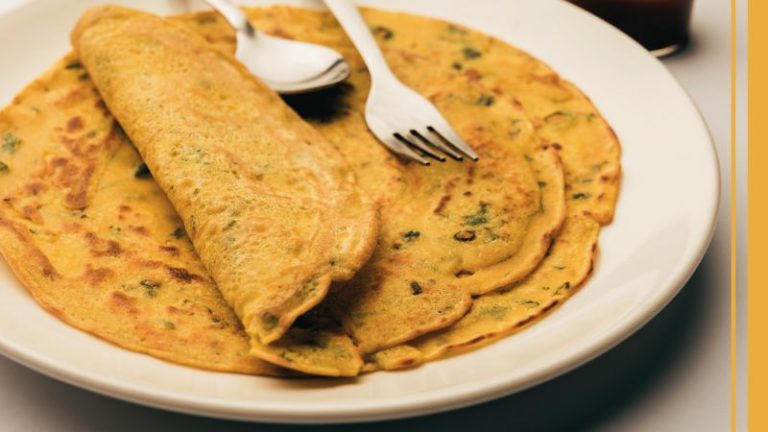
Halwa Puri Calories, and How to Eat It Without Wrecking Your Diet
Halwa puri is not going anywhere, and no dietitian worth listening to is going to tell you to give it up. The useful questions are how many calories are actually on that plate, and what you do with the rest of the day once you have eaten it.
Ayesha Nasir went and ate a full halwa puri breakfast on camera and counted it out as she went. Here is what she found, and where she draws the line.
How many calories are in a halwa puri breakfast
Her numbers, counted at the table rather than looked up:
- One puri: roughly 80 to 100 calories, depending on how much oil it has taken on
- A full platter: around 550 calories. That is puri with aloo bhujia, chana, onion and halwa
- The same platter with chai: roughly 700 calories
Oil is the variable that moves the number most. She makes the point that a well made puri that has not soaked up much oil is worth eating, and a heavy, greasy one she will not touch at all. If the puri leaves a slick on your fingers, the 100 is closer to the truth than the 80.
The calorie count is only half the story
She weighed the breakfast up in nutrients rather than just calories, and this is the part most people never see.
The plate she ate carried something in the region of seven to eight tablespoons of oil. Carbohydrate was very high. Fat was very high. Protein came to around 11 grams, against her own daily requirement of roughly 65 grams.
So a breakfast that costs you 550 to 700 calories, a third of many people’s daily intake, delivers about a sixth of the protein you need for the day. That is the problem with it, more than the calories themselves. You have spent a lot and bought very little.
Want a plan built around this? Ayesha Nasir, Registered Dietitian, builds diet plans around your reports and the food your family already cooks.
Who should not eat halwa puri at all
This is the one part of the video that is not a matter of moderation. Ayesha is direct about it.
- High cholesterol: avoid it
- Fatty liver: avoid it
- Any history of heart disease: avoid it
- Diabetes: approach with real caution, because the plate is heavy on refined carbohydrate and very light on the protein that would slow the rise in blood sugar
If you fall into one of those groups, the honest answer is not a smaller portion. It is a different breakfast. If you are managing blood sugar, a diabetes diet plan built around what you actually eat is a better place to start than trying to fit halwa puri into your Sunday.
But I am in a calorie deficit, so what is the harm?
She gets this question constantly, and it is a fair one. If your target is 1,200 calories a day and you spend 550 on halwa puri, then cover your protein with the rest, the maths works. So why not eat it every Sunday, or every day?
Her answer is that calories are not the only thing you are counting. Halwa puri is bad for heart health, bad for blood sugar and bad for blood pressure. Staying inside your calorie budget does not make those effects go away.
Her framing is simple. Take your calories from things that are doing something for you. Fruit, vegetables, protein, sensible carbohydrates. Do not spend them on something that is quietly damaging you over years while the scale looks fine.
How to eat it without wrecking the day
Assuming you are healthy and it is a Sunday, this is her approach.
- Count it honestly. Around 550 calories for the platter and roughly 700 with the chai, not 300
- Keep the rest of the day moderate. Not starved, not compensating, just sensible portions
- Make dinner a protein meal. She suggests something like barbecue or tikka, which fixes the protein gap the breakfast left behind
- Watch the oil, not just the count. A lighter puri is genuinely a better choice than a heavy one
- Once or twice a month. That is the frequency she gives, and it is the frequency she keeps herself
Sunday is not the real problem
The most useful thing in the video is not about halwa puri at all. It is about what her patients tell her when she asks where their week goes wrong.
The answer is almost always the same. On days when there is nothing ready for breakfast at home, they order halwa puri or naan chana from outside. It is not a treat and it was not planned. It happened because the kitchen was empty at eight in the morning.
One deliberate halwa puri a month is not what stalls people. Three unplanned ones a week, ordered because there was no other option, is what stalls people. Her fix is unglamorous: keep oats in the house. It goes in the microwave and it is ready before the order would have arrived.
If you want other breakfasts that hold up, we have looked at paratha with egg and at whether Weetabix works for weight loss.
The short version
A halwa puri platter runs to roughly 550 calories, or about 700 once you add the chai. It brings around 11 grams of protein against a daily need closer to 65, and it carries seven to eight tablespoons of oil.
If you are healthy, once or twice a month is fine. Keep the rest of that day moderate and make dinner a protein meal. If you have high cholesterol, fatty liver or a heart history, it is not a portion problem, it is a different breakfast. And if halwa puri is showing up on weekday mornings because nothing else was ready, that is the habit worth fixing, not the Sunday.
If you want a plan built around the food that is already in your kitchen rather than one that bans it, that is what a proper weight loss diet plan should do. You can book a consultation with Ayesha Nasir in Lahore or online anywhere in Pakistan.
Calorie figures here are Ayesha Nasir’s estimates for the platter shown in the video and will vary with portion size and how much oil is used. This article is general information and not a substitute for a personal consultation, particularly if you have diabetes, high cholesterol, fatty liver or heart disease.